
Drafting Workshop in Discrete Mathematics, Number Theory and Probability 2026
Description
Several postdoc positions are available in Budapest in various research groups in Discrete Mathematics, Number Theory and Probability theory. To make the application process more efficient and joyful, we are organizing a drafting workshop for young researchers interested in these positions at the Rényi Institute.
The participants of the workshop can present their work in a research talk, learn more about the research environment in Budapest, meet the heads and members of the research groups in person and in case of a perfect matching, get an offer on the spot.
The workshop is invitation based.
Monday, January 19, Erdős Center
RESEARCH GROUPS:
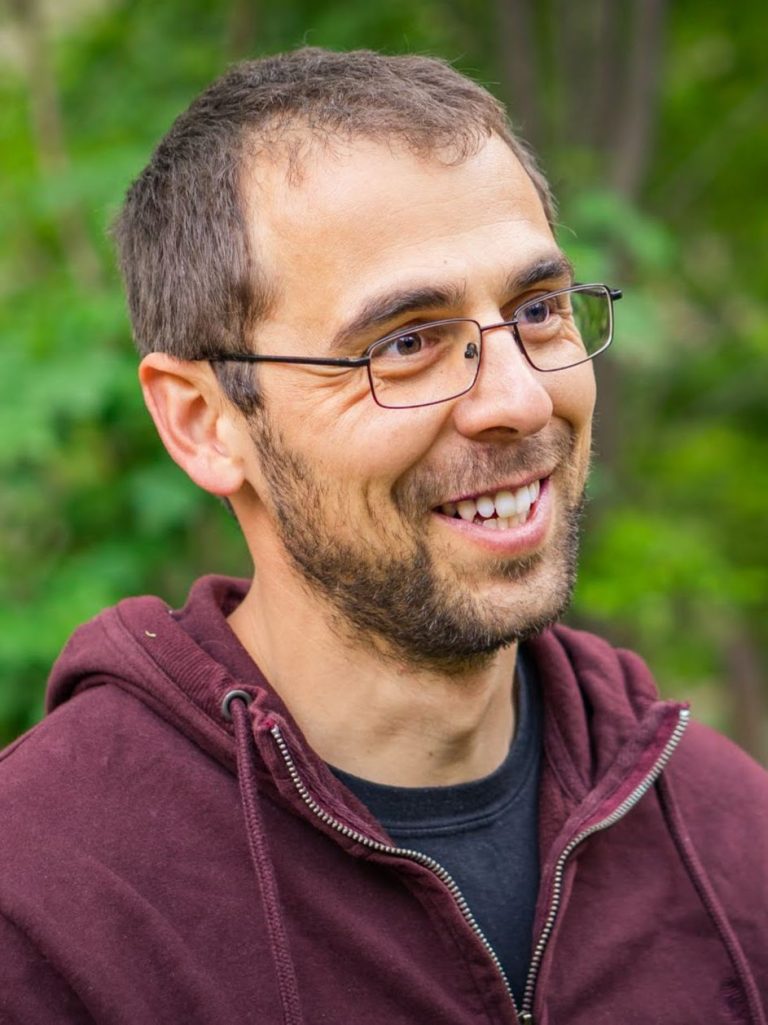
Counting in Sparse Graphs Research Group
Head: Péter Csikvári, Alfréd Rényi Institute of Mathematics
E-mail address: csikvari.peter@renyi.hu
We aim to study approximate counting problems of combinatorial objects of a given graph besides restricted information. This general framework includes counting matchings, independent sets, colorings given the degree sequence or local statistics or may be the whole graph as an input. The project is many faceted, it has combinatorial, algorithmic, algebraic, analytic, probabilistic, statistical physical sides, but a good understanding of basic graph theory is required.
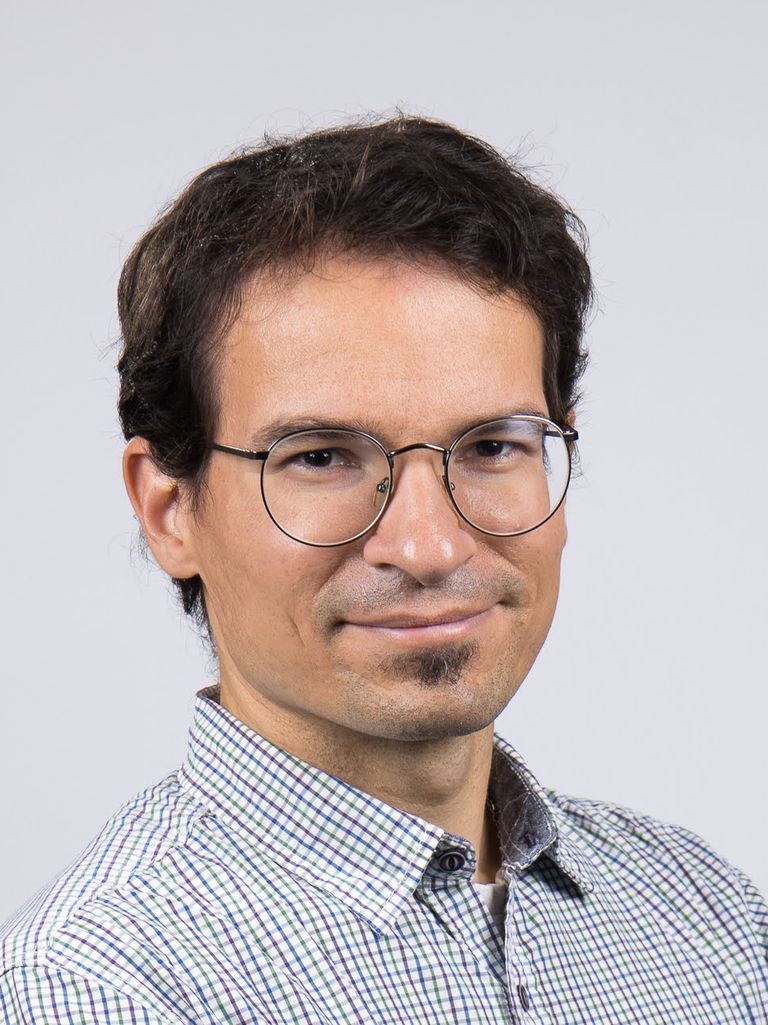
Quantum Algorithms and Stochastic Processes Research Group
Head: András Gilyén, Alfréd Rényi Institute of Mathematics
E-mail address: gilyen.andras@renyi.hu
We study quantum algorithms and complexity, with a recent focus on stochastic quantum processes related to Glauber and Metropolis dynamics, and more generally quantum walks and quantum linear algebra methods (quantum singular value transformation and the block-encoding framework) with application in optimization and related fields.
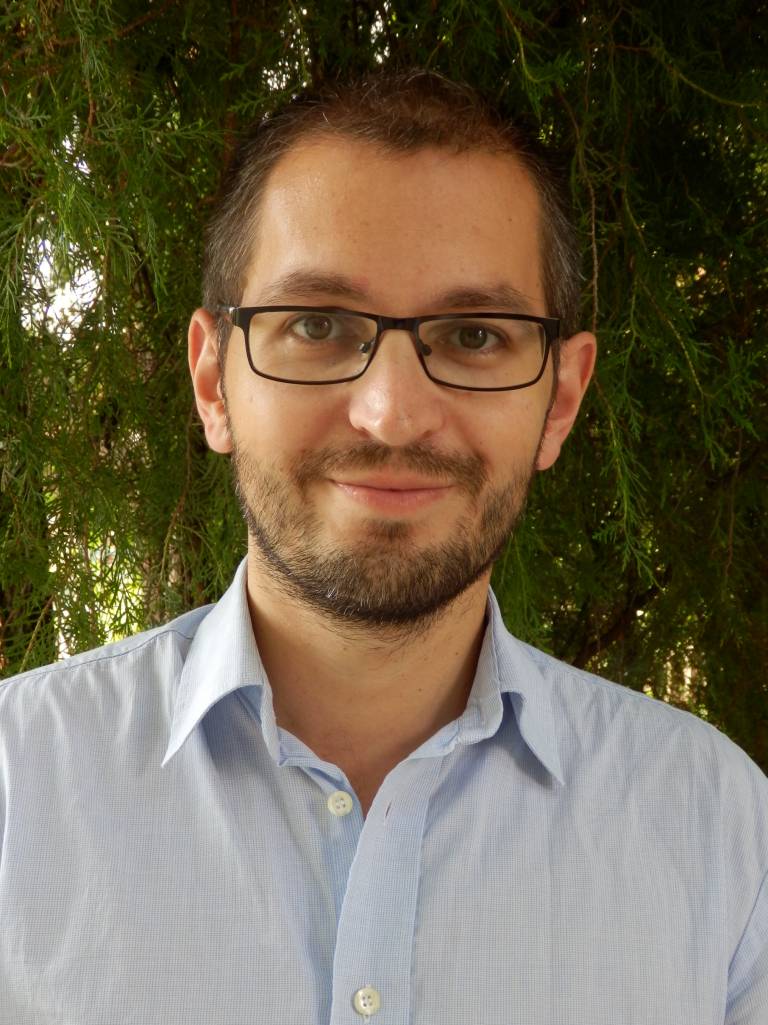
Effective Random Methods in Discrete Mathematics Research Group
Head: Gábor Tardos, Alfréd Rényi Institute of Mathematics
E-mail address: tardos.gabor@renyi.hu
The probabilistic method, pioneered by Paul Erdős, can show the existence of combinatorial objects without hinting how to construct them effectively. Recent developments concerning the constructive version of Lovász Local Lemma (LLL) showed how to modify the probabilistic method to make it effective. We plan to concentrate on applications in combinatorics, measure theory, geometry, and cryptography.
Automorphic forms
Head:Árpád Tóth, Alfréd Rényi Institute of Mathematics
E-mail address: toth.arpad@renyi.hu
We study arithmetic and geometric applications of automorphic forms mainly on the groups GL(2), GSp(n) (but also on GL(n)). The main focus is on the two way applications of modular forms to exponential sums and vice versa and further application of these results to equidistribution problems. Other topics include the evaluation of certain Dirichlet-like multivariable distributions, class number formulas, and geometric applications to certain Riemann surfaces.
 Borel Combinatorics and Complexity Research Group
Head: Zoltán Vidnyánszky, Eötvös Loránd University
E-mail address: vidnyanszkyz@protonmail.com
Our research group investigates infinite graphs and their combinatorial properties, but, instead of the measurability requirement typically present in the case of graphons/graphings, we consider definable (e.g., Borel) graphs and chromatic numbers. It turns out that there are numerous connections of these objects to computational complexity and distributed computing.
p-adic Arith metic
metic
Head: Gergely Zábrádi, ELTE, Budapest
E-mail address: gergely.zabradi@ttk.elte.hu
We are primarily interested in the p-adic and modulo p Langlands programme connecting local Galois representations and automorphic representations. We especially investigate certain product constructions whose analogues played a central role in the geometric Langlands correspondence in positive characteristic. Further topics include related questions in p-adic Hodge theory, p-adic representation theory of p-adic reductive groups, and the theory of perfectoid spaces.