
Drafting workshop in Discrete Mathematics, Number Theory and Probability 2027
Description
Several postdoc positions are available in Budapest in various research groups in Discrete Mathematics, Number Theory and Probability theory. To make the application process more efficient and joyful, we are organizing a drafting workshop for young researchers interested in these positions at the Rényi Institute.
The participants of the workshop can present their work in a research talk, learn more about the research environment in Budapest, meet the heads and members of the research groups in person and in case of a perfect matching, get an offer on the spot.
The workshop is invitation based.
Application Deadline: December 18, 2027
RESEARCH GROUPS:
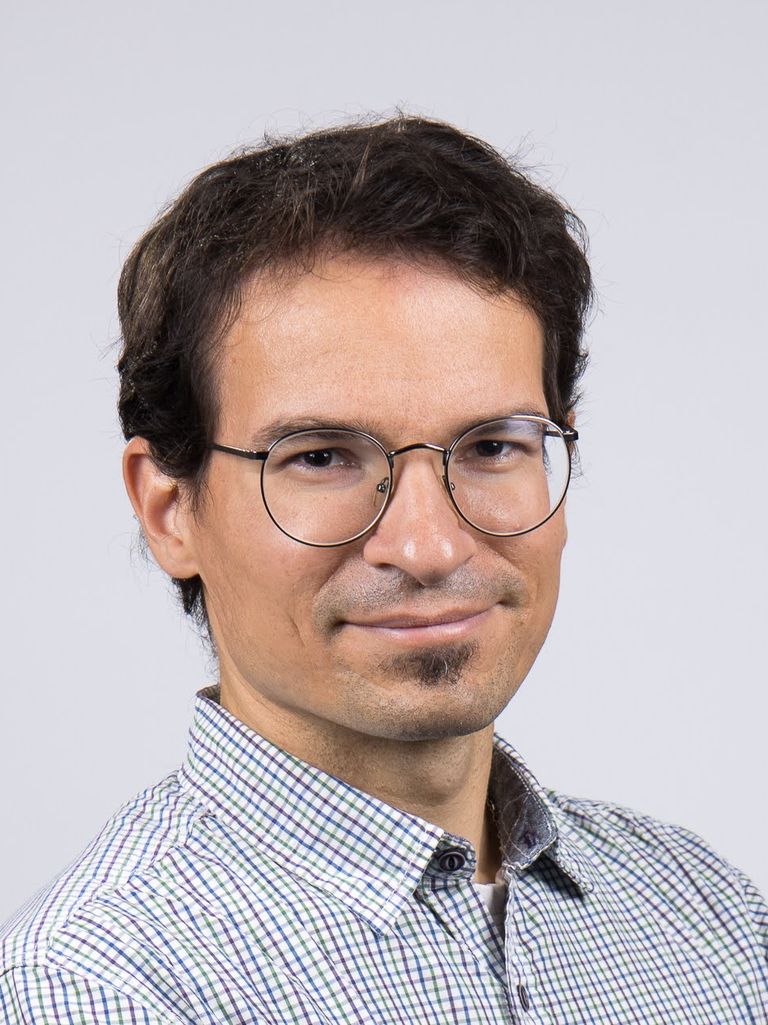
Quantum Algorithms and Stochastic Processes Research Group
Head: András Gilyén, Alfréd Rényi Institute of Mathematics
E-mail address: gilyen.andras@renyi.hu
We study quantum algorithms and complexity, with a recent focus on stochastic quantum processes related to Glauber and Metropolis dynamics, and more generally quantum walks and quantum linear algebra methods (quantum singular value transformation and the block-encoding framework) with application in optimization and related fields.
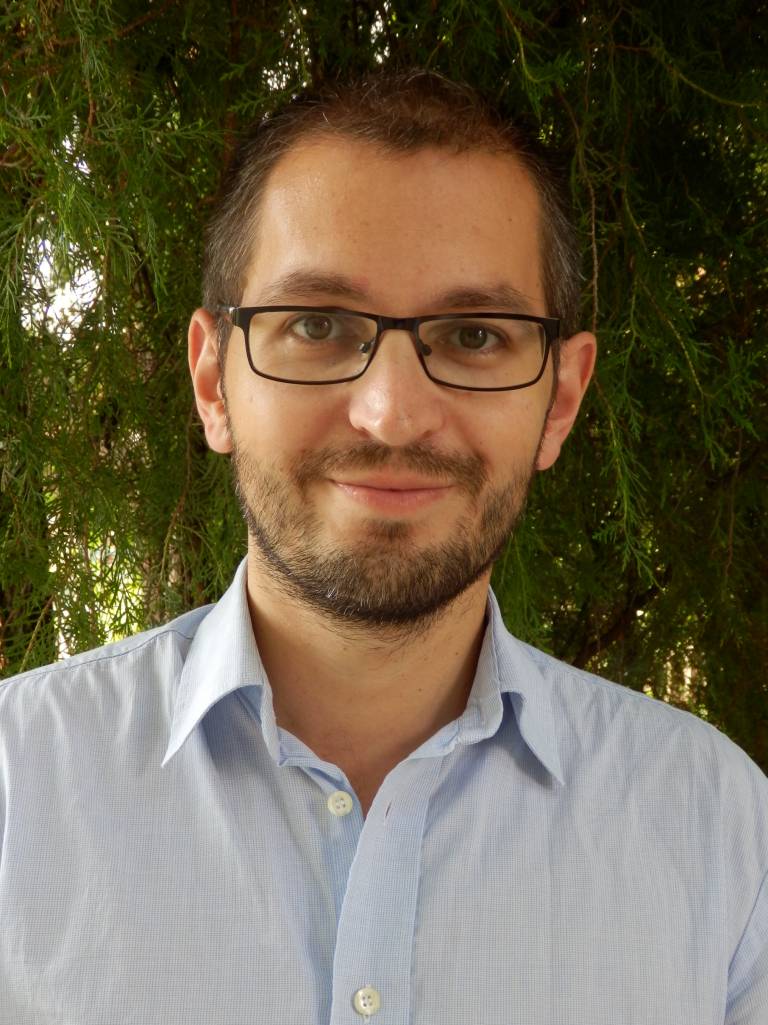 Arithmetic Combinatorics Research Group
Head: Péter Pál Pach, Alfréd Rényi Institute of Mathematics
E-mail address: pach.peter.pal@renyi.hu
Our aim is to introduce novel methods to solve problems of various types from Arithmetic Combinatorics. We particularly concentrate on developing techniques built on (linear) algebraic grounds like the slice rank method. A central question to be investigated is the following: What is the largest possible size of a k-AP-free subset of \(\mathbb{Z}_{p}^{n}\) ?
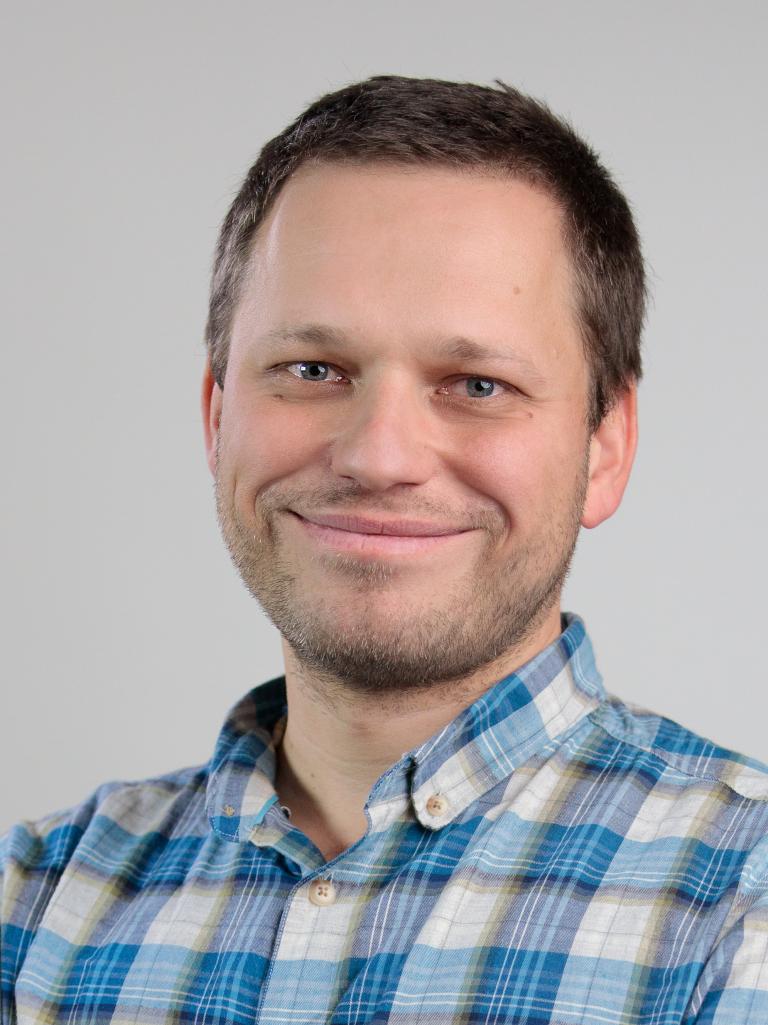 Noise-Sensitivity Everywhere Research Group
Head: Gábor Pete, Alfréd Rényi Institute of Mathematics
E-mail address: pete.gabor@renyi.hu
Noise-sensitivity of a Boolean function with random input bits means that resampling a tiny proportion of the input makes the output decorrelate faster than the relaxation time of the entire system. For iid random input, discrete Fourier analysis yields a useful theory to understand what functions are noise-sensitive, with great applications, e.g., in percolation theory. What happens for non-iid input, such as the Ising model, Gaussian random fields, spanning forests, or factor of iid processes? A related goal is to study the (near-)critical behavior of statistical physics models on Cayley graphs of groups and on random graphs.
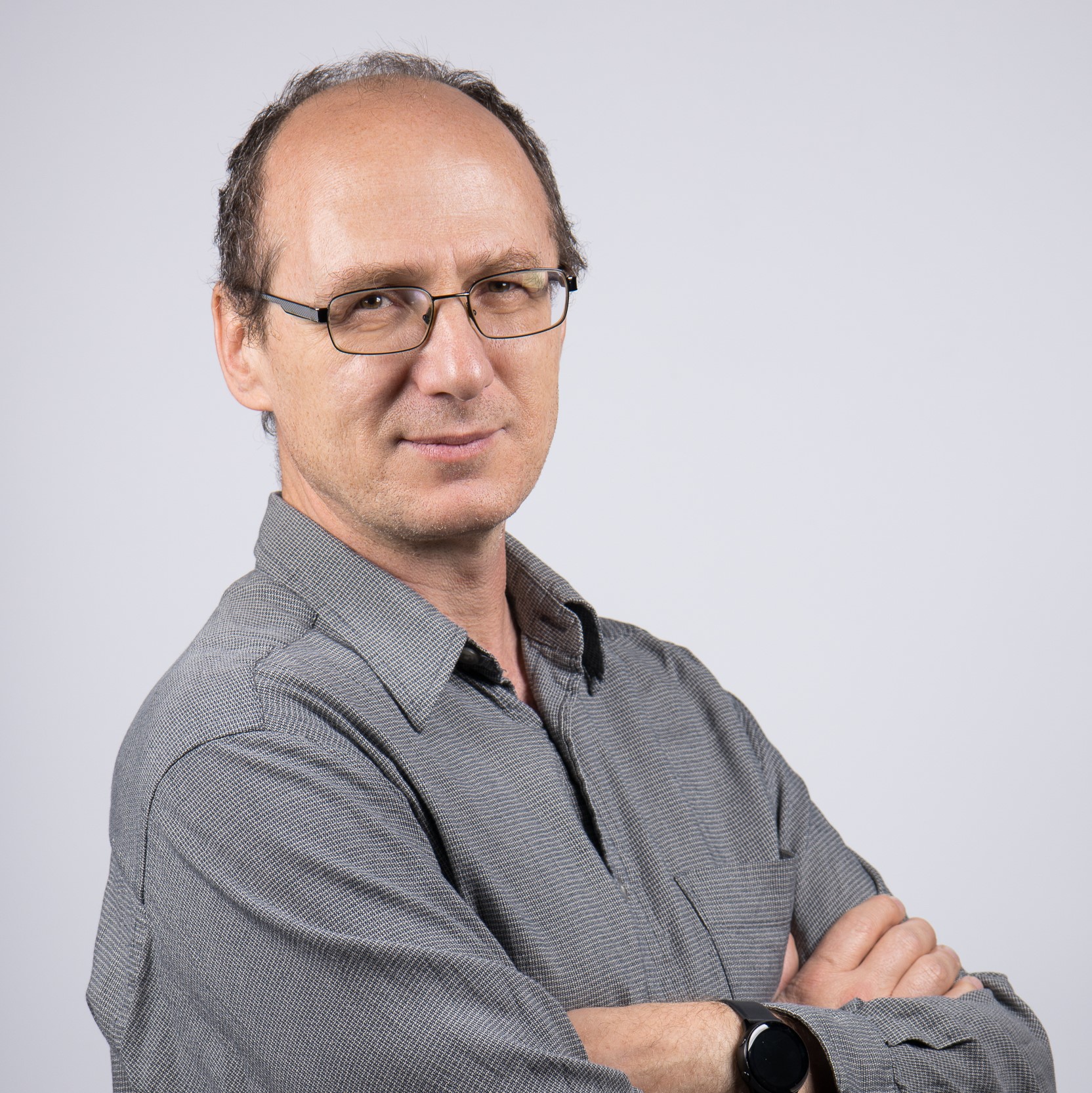
Automorphic forms
Head:Árpád Tóth, Alfréd Rényi Institute of Mathematics
E-mail address: toth.arpad@renyi.hu
We study arithmetic and geometric applications of automorphic forms mainly on the groups GL(2), GSp(n) (but also on GL(n)). The main focus is on the two way applications of modular forms to exponential sums and vice versa and further application of these results to equidistribution problems. Other topics include the evaluation of certain Dirichlet-like multivariable distributions, class number formulas, and geometric applications to certain Riemann surfaces.
 Borel Combinatorics and Complexity Research Group
Head: Zoltán Vidnyánszky, Eötvös Loránd University
E-mail address: vidnyanszkyz@protonmail.com
Our research group investigates infinite graphs and their combinatorial properties, but, instead of the measurability requirement typically present in the case of graphons/graphings, we consider definable (e.g., Borel) graphs and chromatic numbers. It turns out that there are numerous connections of these objects to computational complexity and distributed computing.